
Which barcode scanner should you choose for your store?
In this review we will take an unusual route. We will not talk about which barcode scanners exist, nor about how to choose a scanner by studying a "technical specifications guide".
Let us do it differently. We will divide shops into three kinds — small, medium and large — and tell you from our experience as an integrator "what and why" we install there.
1. "Small" shops (scanners from $50)
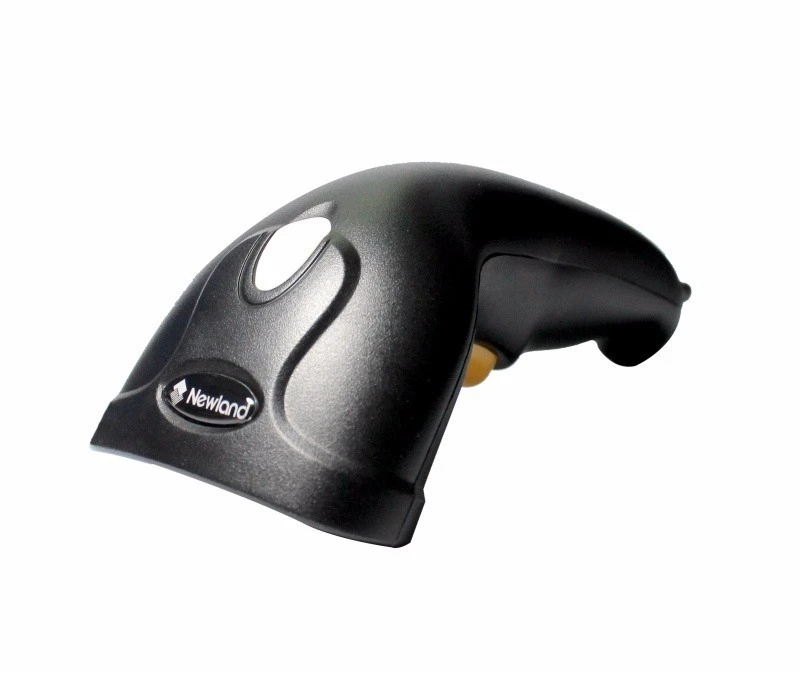
As we see it, a "small" shop is one where up to 3 customers may queue at a time. The sales assistant is not too busy and can use the simplest, "slower" barcode scanners, such as the Newland HR1250. Cheap and cheerful.
It works both in handheld and in automatic mode (stand is an option). Yes, it is not very fast and has to be brought close to the barcode at a certain angle. But it is inexpensive and reliable. It will not break.
P.S. It is better not to deal with scanners from unknown makers cheaper than $50. Experience shows they get replaced at least once a year.
2. "Medium" shops (scanners from $75)
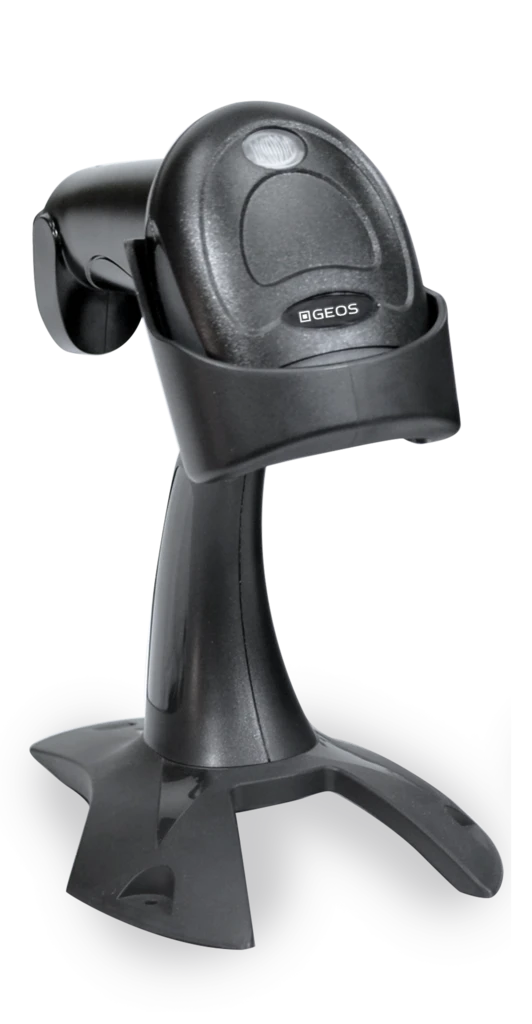
A "medium" shop — up to 5 customers may queue at a time. Here you need something more nimble, for example the GEOS SD580 2D barcode scanner.
As you can see, the point of this scanner is not that it is "super fast", but that you can simply place it on a stand and pass goods underneath. Quick and convenient.
Two-dimensional scanners are the peak of barcode recognition technology and are becoming ever more popular. Modern boutiques, supermarkets, restaurants and entertainment centres build customer loyalty through mobile apps that require a QR code to be read — and there the seller cannot do without a 2D scanner.
P.S. Of course, you can buy the simplest scanner for a "medium" shop too. But where would you, as a customer, rather go: where the queues are long, or where you do not linger at the checkout?
3. "Large" shops (scanners from $200)
A "large" shop — 5 or more customers queue at a time. And it need not be a supermarket. In our experience, at peak time a standard shop of 100 sq. m with 2-3 checkouts can gather 7 or more customers at each till.
Here the cashier works as if on a conveyor, so a multi-plane barcode scanner is needed. It is a marvel you can pass goods by at any angle and any speed — though still with the barcode facing the scanner; it is not a mind reader :).
In such cases we recommend two options.
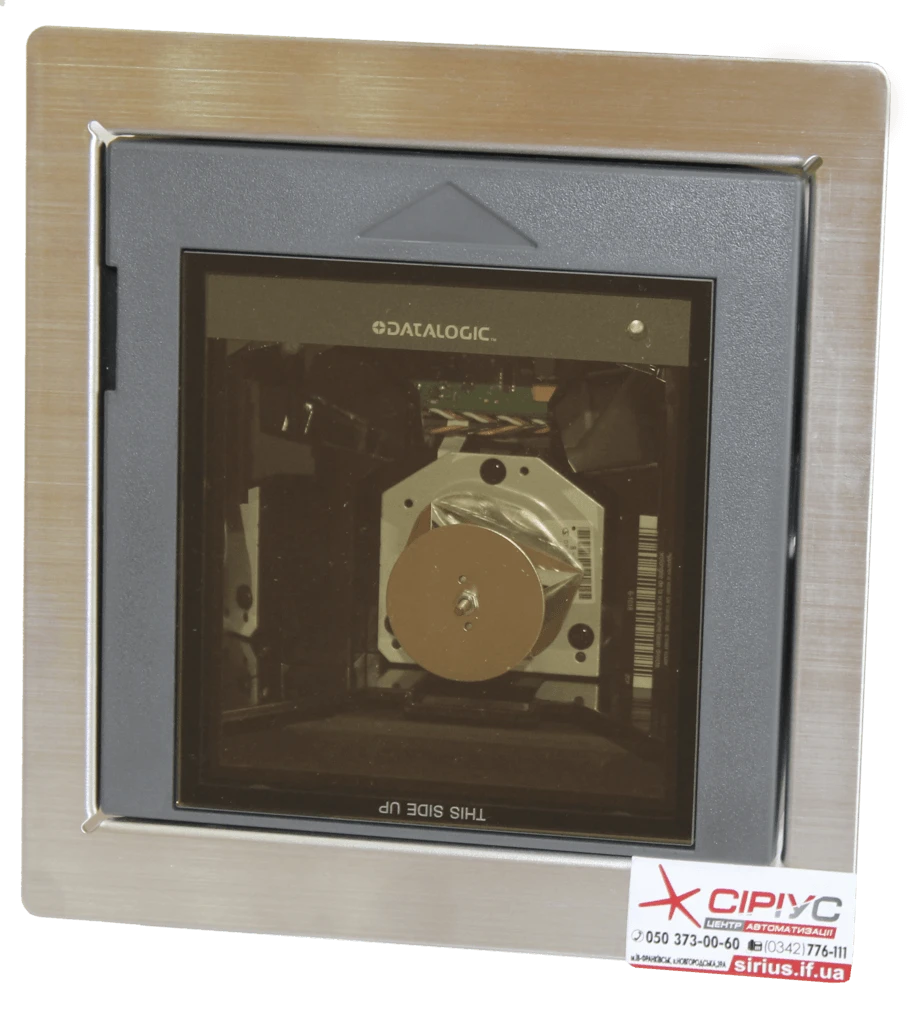
The first: a standard, reliable scanner built into the counter. Goods glide over it like skates on ice, quickly and conveniently. The Datalogic Magellan 2300 HS, for instance, has been a classic of the genre for many years.
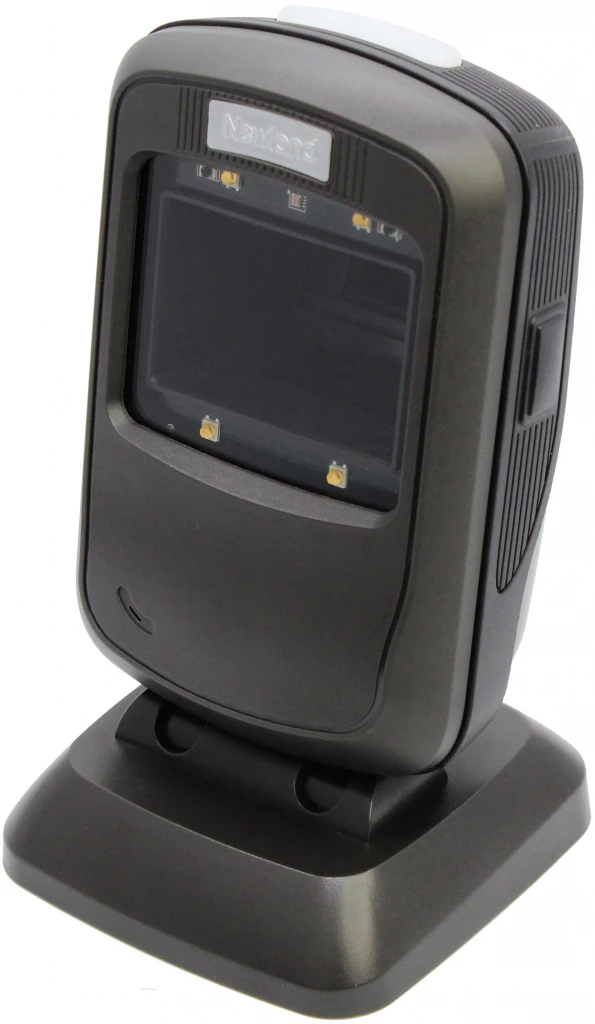
The second: use a desktop barcode scanner such as the Newland FR4080 Koi II. It is multi-plane and fast as well. The difference from the first option is that it is not built into the counter surface but simply placed on a stand — a small, handy cube. Every shop has its own specifics, so the choice between a desktop and a built-in scanner is left to the integrator. That is no longer your headache.
We hope our review has been useful and that you now understand barcode scanners better, without filling your head with technical tables. Follow our publications.